The Lost-Wax Process
The Lost-Wax Process
The lost-wax process is a centuries-old casting technique renowned for producing fine art bronze sculptures of exceptional quality, precision, and durability. Every sculpture passes through a series of carefully managed stages, each requiring specialist knowledge and meticulous attention to detail — carried out entirely in-house by our experienced team of artisans, ensuring complete quality control from the original artwork to the finished bronze.
01
Mould Making
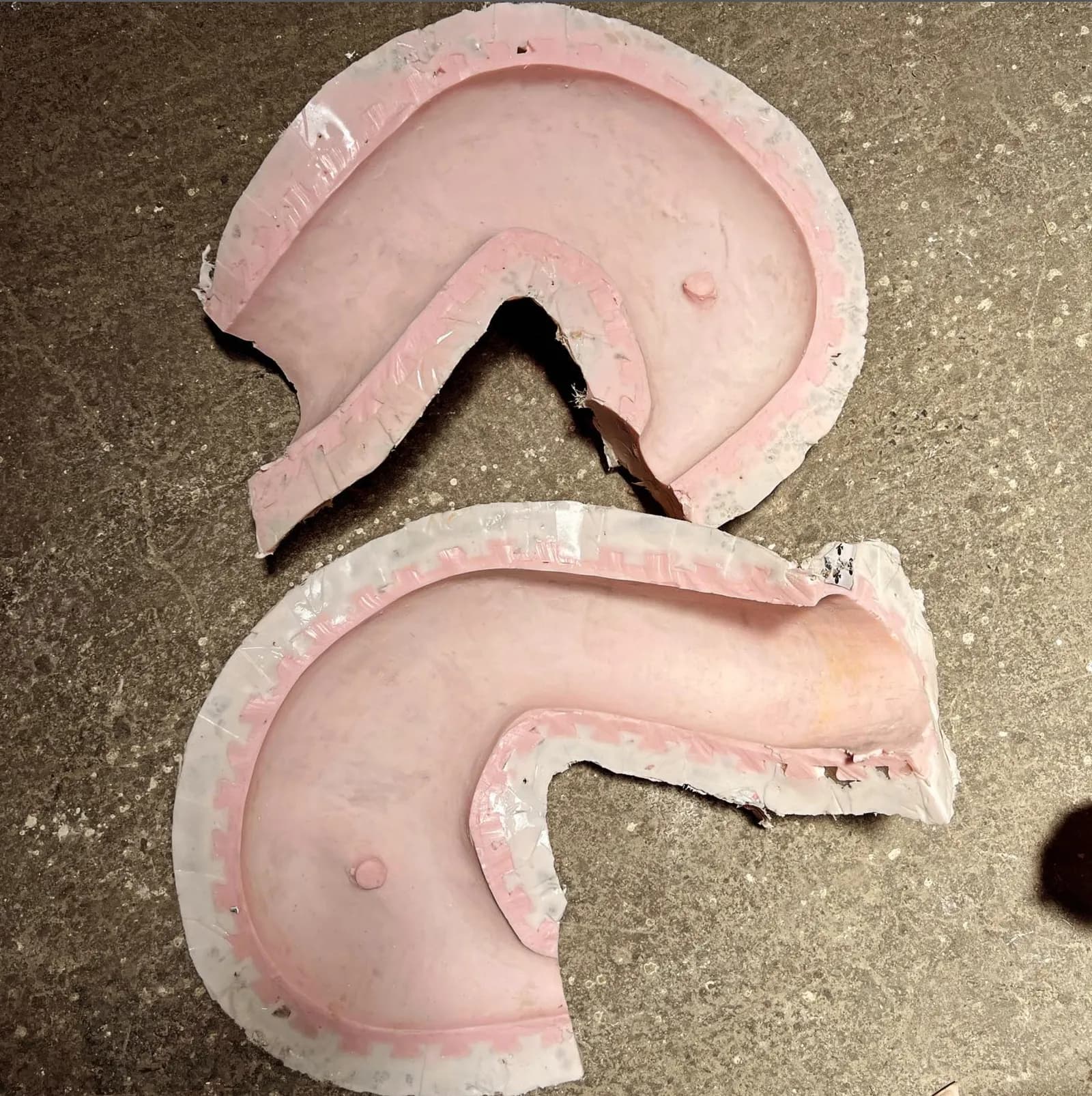
Mould making is a highly skilled and time-sensitive process that forms the foundation of every successful bronze casting. Using premium silicone rubber, we carefully cover the original artwork to create a highly detailed negative mould that captures every texture, contour, and fingerprint of the artist's work with exceptional accuracy.
Once the silicone has fully cured, a rigid fibreglass and resin support jacket is constructed around the mould to maintain its shape and structural integrity. Without this supporting shell, the flexible silicone would distort when removed, compromising the accuracy of the final cast.
Together, the silicone mould and support jacket provide a durable, precise, and reusable mould capable of producing consistent, high-quality castings for both limited editions and monumental sculptures.
02
Wax Casting
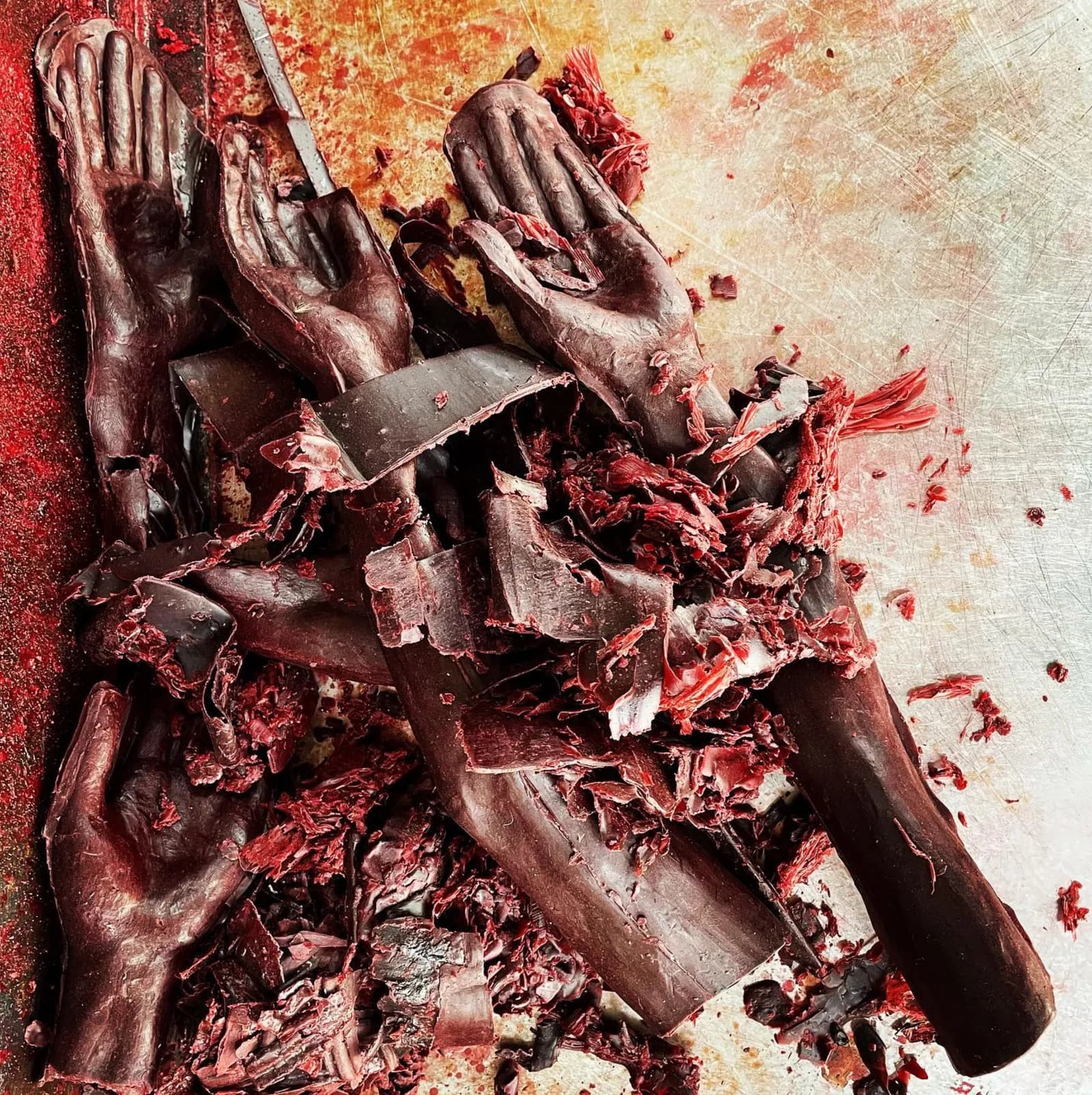
Once the silicone mould has been completed, it is transferred to our wax department, where layers of molten casting wax are carefully brushed into the mould to achieve a uniform wall thickness of approximately 5–8 mm. This thickness determines the final thickness of the bronze casting, ensuring both structural integrity and optimal material efficiency.
After the wax has cooled and is removed from the mould, each wax replica undergoes a meticulous fettling process. Seam lines and imperfections are carefully refined using specialist sculpting tools, white spirit, and controlled heat, resulting in a flawless wax model that faithfully reproduces the original artwork.
The finished wax is then “tree'd up” by attaching a network of wax runners, risers, and pouring cups. These form the channels through which molten bronze will later flow, allowing it to fill every detail of the sculpture evenly and efficiently.
03
Ceramic Shell Making
Ceramic shell making is a vital stage in the lost-wax casting process, creating the heat-resistant mould into which molten bronze is poured. Although this stage is one of the most demanding within the foundry, it is essential for producing castings of exceptional strength and detail.
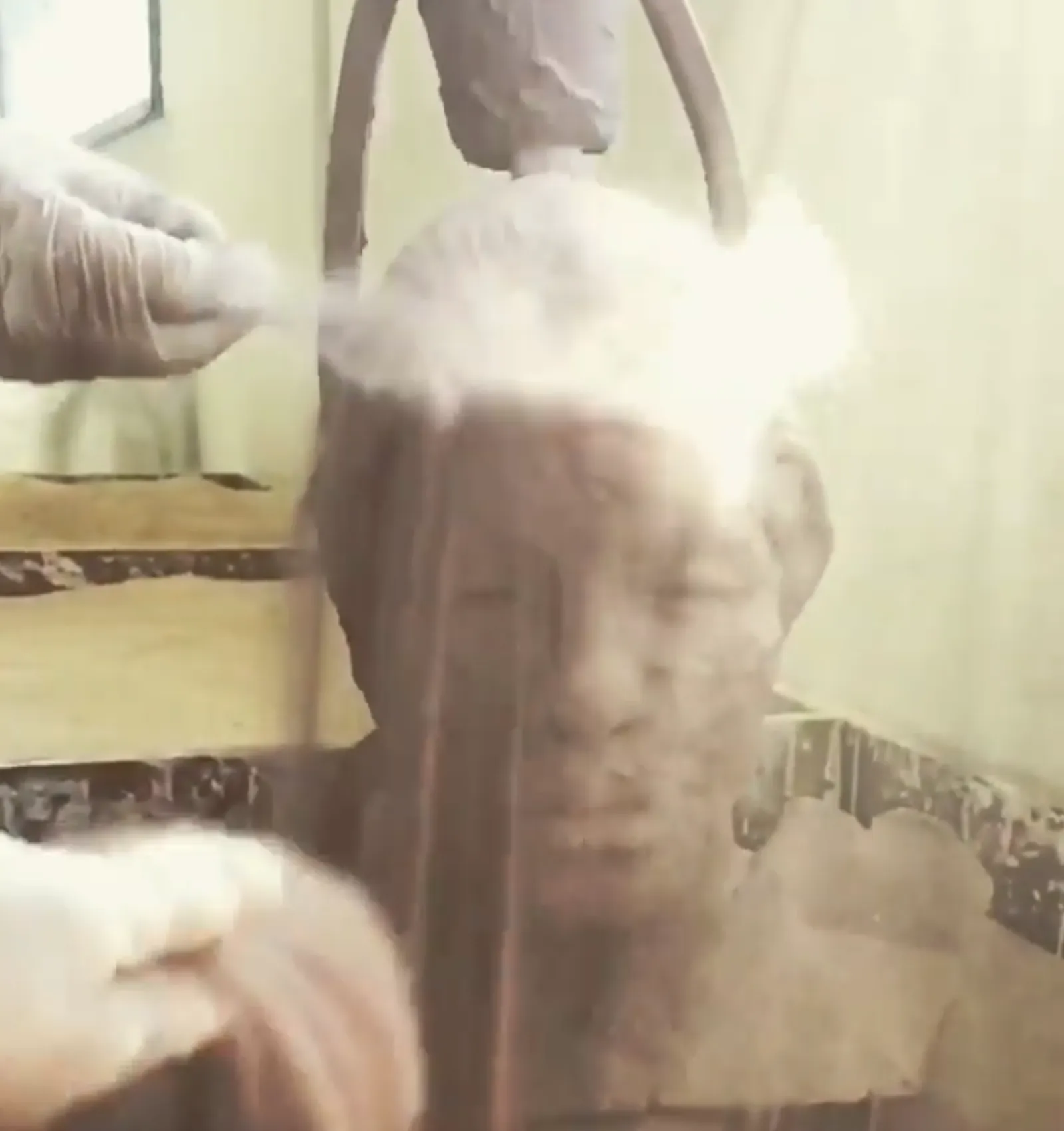
Each wax assembly is repeatedly dipped into a specialised ceramic slurry before being coated with fine fused silica. This process is repeated up to twelve times, depending on the size and complexity of the sculpture, allowing successive layers to build a strong, durable ceramic shell capable of withstanding the extreme temperatures of molten bronze.
Once the shell has fully cured, it is prepared for burnout and heated in a kiln to approximately 800–900°C, where the wax melts away — leaving behind a hollow ceramic mould. This process, which gives the lost-wax method its name, also strengthens the shell in preparation for the bronze pour.
04
Bronze Pouring
Bronze pouring is one of the most exciting and carefully orchestrated stages of the lost-wax casting process. Precision, timing, and teamwork are essential to ensure every sculpture is cast successfully.
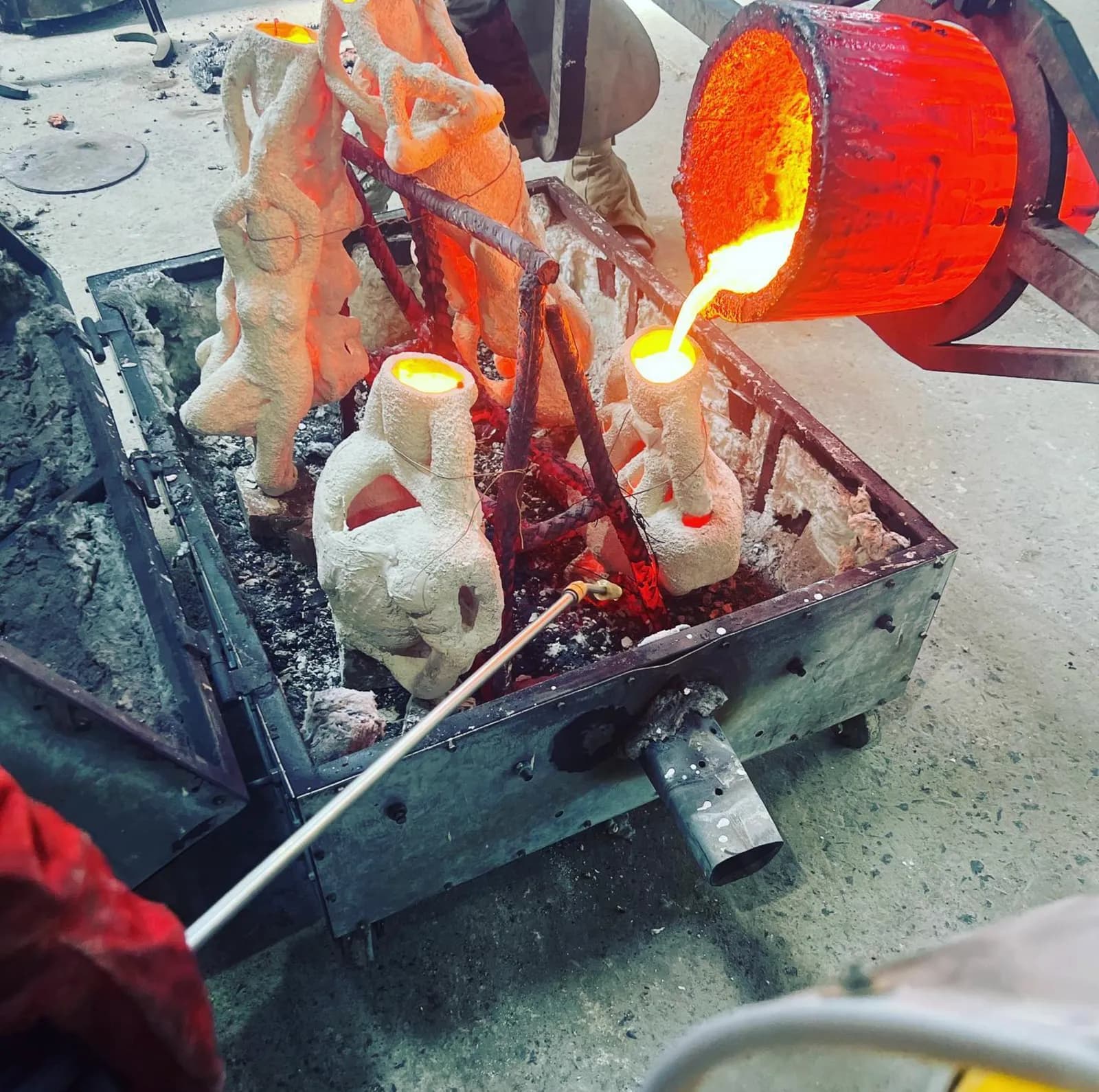
While the ceramic shells are maintained in the kiln at approximately 800°C, bronze ingots are melted in the furnace at temperatures exceeding 1,100°C until the metal reaches its optimum pouring temperature. Keeping the moulds hot prevents thermal shock and allows the molten bronze to flow freely, capturing even the finest details of the original artwork.
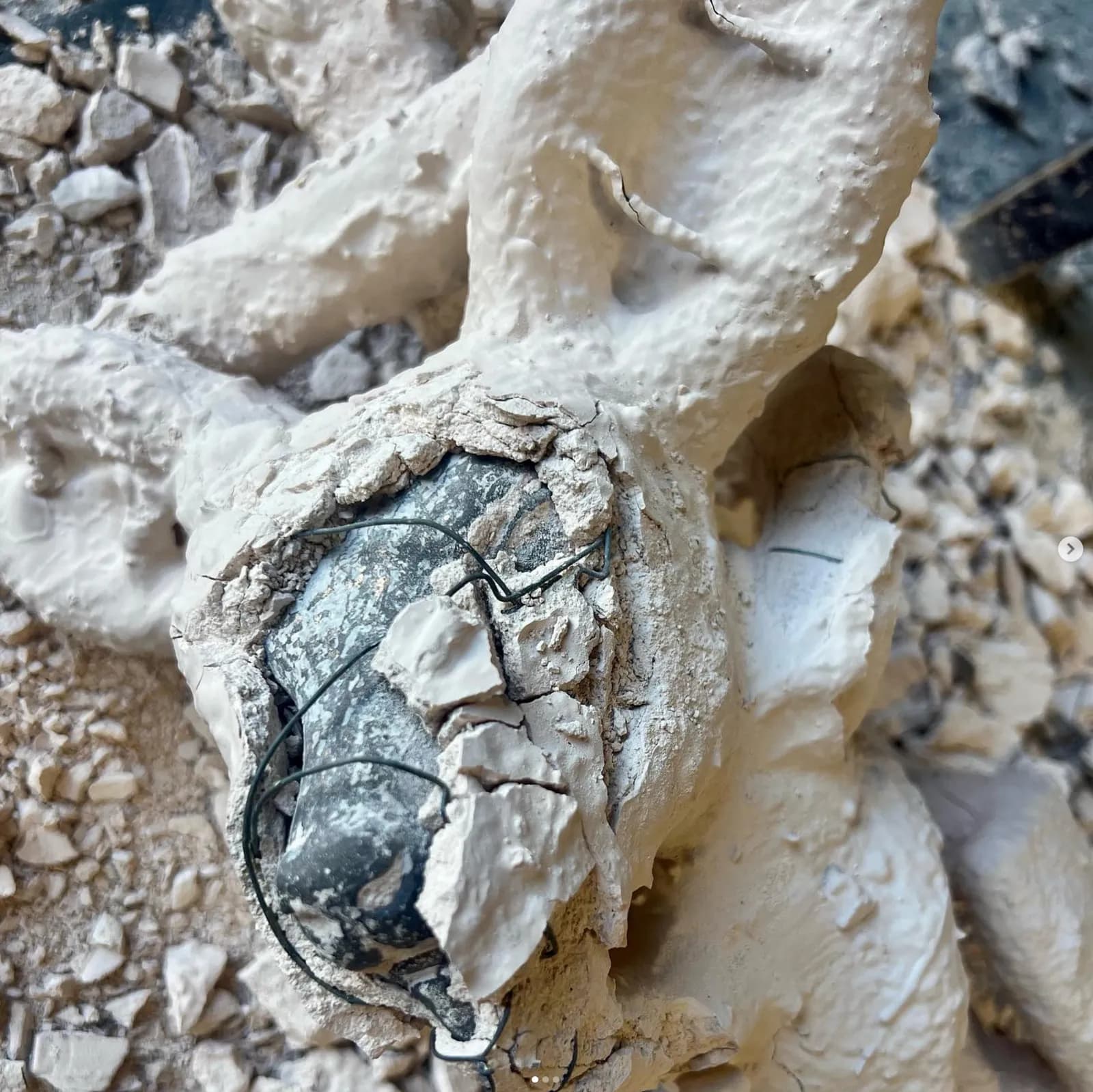
The heated shells are transferred to a sand pit and secured with compacted sand for stability. The crucible is then lifted from the furnace and positioned within a pouring shank, allowing the molten metal to be safely and precisely poured into each shell through the gating system. Once cooled and solidified, the ceramic shell is removed to reveal the first bronze version of the sculpture.
05
Metalwork
Once the bronze has cooled, the ceramic shell is carefully broken away to reveal the raw casting. The metalwork stage is where each sculpture begins its transformation from a cast object into a finished work of art through a combination of precision engineering and traditional craftsmanship.
The runners, risers, and gating system are removed using angle grinders and specialist cutting tools before the sculpture is thoroughly sandblasted to eliminate any remaining traces of ceramic shell. This prepares the surface for the meticulous process of chasing and fettling — restoring every surface detail, texture, and contour to faithfully match the original artwork.
For larger sculptures, individual cast sections are expertly assembled using TIG welding. These precision welds are chased and blended by hand until the joins become completely invisible, creating the appearance of a single, seamless bronze sculpture. Achieving this level of craftsmanship requires years of technical training, experience, and an exceptional eye for detail.
06
Patination
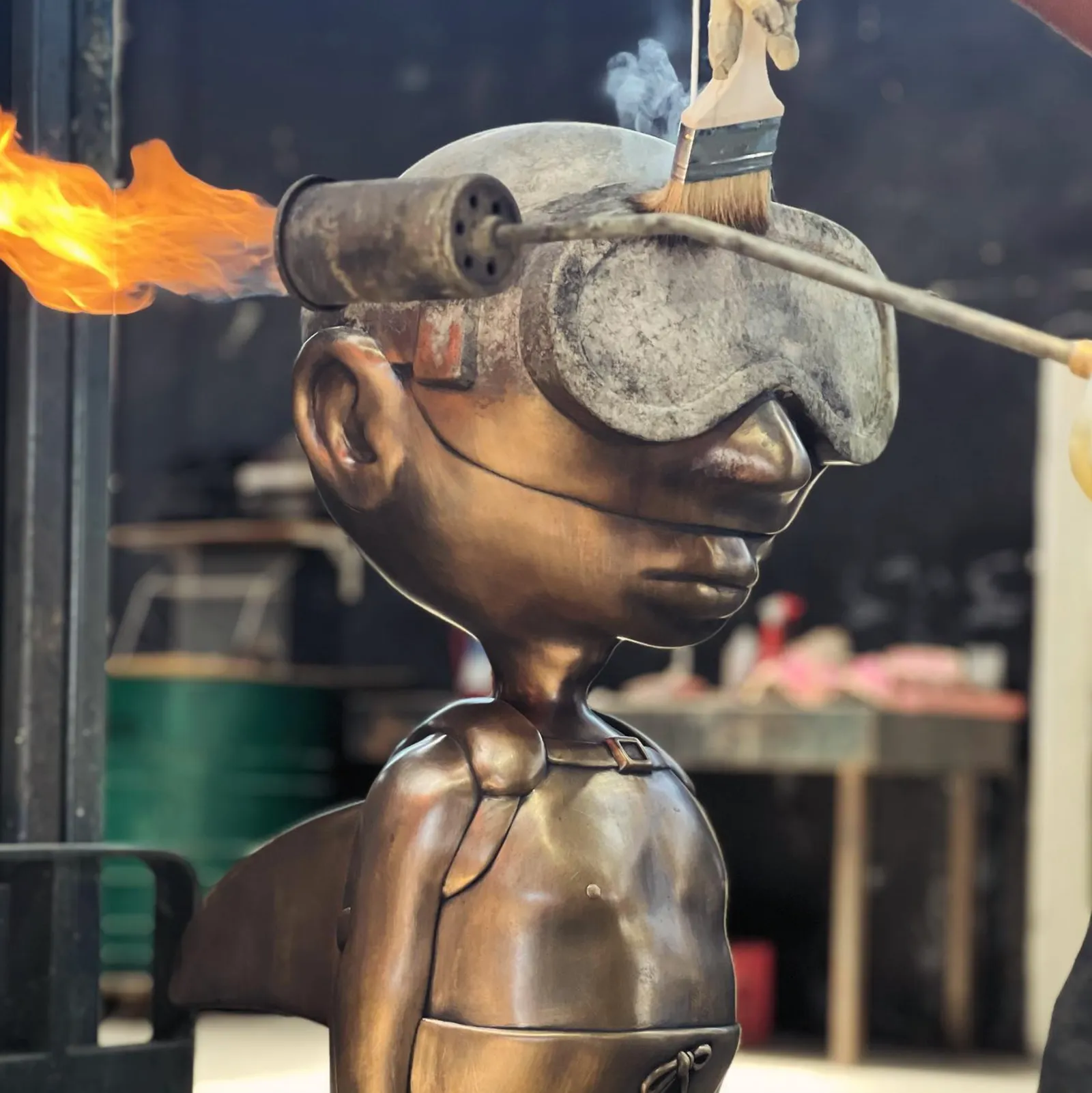
Patination is the final stage of the foundry process, transforming the raw bronze into a finished work of art. It is here that the sculpture reaches the end of its production journey and begins its new life as a beautifully crafted piece, ready to be displayed and enjoyed for generations.
Using carefully controlled heat and a range of specialised chemical patinas and metal oxides, our experienced patinators develop rich, durable surface finishes that enhance the form, texture, and character of each sculpture. From classic warm bronze tones to contemporary and highly individual finishes, every patina is created to complement the artist's vision.
Each layer is carefully built up, adjusted, and sealed before a final protective wax coating is hand-applied and polished. This enriches the depth and colour of the bronze while providing long-term protection against the elements and natural ageing. The patination process is where technical expertise meets artistic expression.
Ready to cast your work in bronze?
From intimate editions to monumental commissions, we'd be delighted to guide your sculpture through every stage of the process.
Start a Project